Author Archives: breakfastadmin

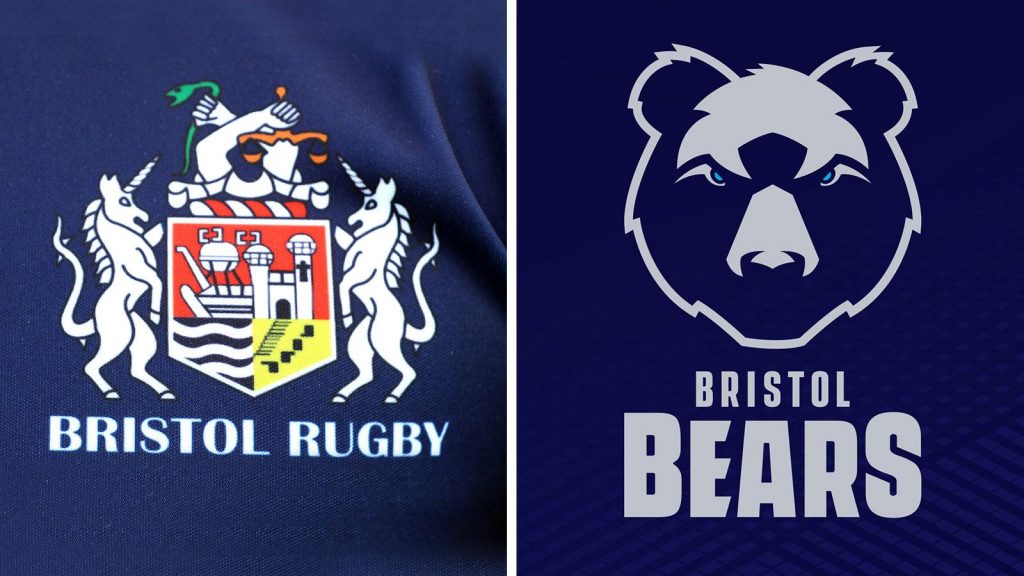
Bristol Rugby Rebrands To Bristol Bears: This Rebrand Is Personal

I have lived in London all my adult life, yet can’t wait to tell people I’m a West Country boy, from Bristol to be exact. By which, I mean NOT Bath, and not Gloucester – I’m from Bris.

What is not to love about a youth spent playing rugby on a weekend, while skimming the shadier sides of the Dug Out, Locarno, Bamboo Club and Trinity Hall the rest of the week?

I grew up watching Bristol play rugby, before professionalism, against the best England and Wales had to offer. I saw Alan Pearn digging for victory, Pomphrey on the charge and Morley scoring for fun. My proudest sporting moment was pulling on the Bristol shirt for the Colts team. Rollitt and Rafter are names that make my heart skip a beat.

So it should not be a surprise that I take the re-brand of Bristol Rugby to Bristol Bears very seriously. And as a branding consultant I couldn’t let this significant event pass without asking myself how I really feel about it.

So, how do I feel?

Personally, I feel let down by the re-brand; it feels lazy, flabby – like someone said ‘well, the falcon, shark and tiger are gone, what shall we be? Bears? Yeah, they’re cuddly, yet fierce, like us. That’ll work.

Sports teams are special brands
Sports teams are special brands because they are so important to the supporter; Bristol Rugby represents the place where I was ‘made’ and therefore the memories and experiences of a lifetime (or in my case, my first 20 years). I am part of Bristol and Bristol Rugby is part of me. I am a part of the brand and the brand defines a part of who I am. Being removed from Bristol by time and distance actually makes my connection run deeper; that’s why it counts.

The timing of the ‘rebrand’ is a good. It marks a new chapter in the history of the Club; it suggests confidence in the latest regime and confidence in the future. It says ‘this time won’t be like the last time’.

The line ‘together we rise’ suggests tribal strength and potency.

The graphic logo is fierce, yet open and likeable.

It’s just the name I don’t really understand.

I have nothing against bears. They are strong, protective, ferocious but not wanton. But what do they have to do with Bristol?
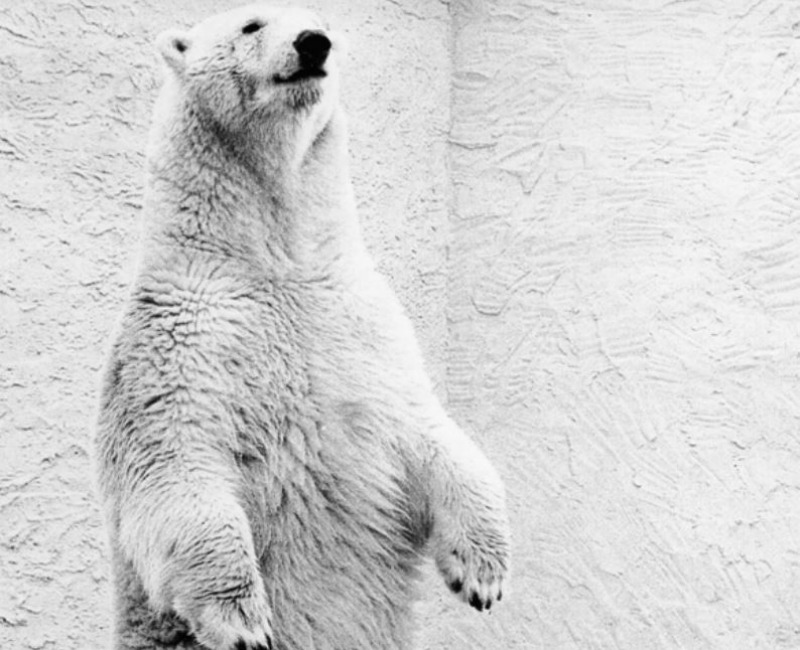
The strongest association I can make is that Bristol Zoo used to have a few polar bears in the days before it became a ‘zoo-alogical garden’. The concrete floor was painted blue, as I remember, to make a it resemble the Arctic; the poor animals went crazy and spent all day swaying from side to side.

Maybe it’s the association between bears and hibernating, or a policy of ‘Winter lethargy’ as it’s more accurately described. I definitely associate Bristol with some dopey moments over the last few years, more usually in the Spring play-offs, but think this is a pretty negative springboard for a re-brand.

Perhaps it was a tribute to Johnny Morris and the Animal Magic programme made by the BBC in Bristol?

I’ve been trying to find out who came up with the name. It wasn’t the branding agency, who are clear on their website that the name had already been decided by the time they were brought on board.

It wasn’t the people of Bristol. A poll on Bristol’s Post website found 74 per cent of more than 700 voters were unhappy with the transformation.

It wasn’t the core supporters and in fact “I’m not best pleased,” Bristol Rugby Supporters Club treasurer Mike West told the BBC “I’m absolutely puzzled why they didn’t consult the Bristol Rugby Supporters Club, which represents a majority of fans.”

I feel Mike is holding back how he really feels.

Is there a better way to rebrand Bristol Rugby?
Do I think I could have done any better? I’m not sure, but I would try to start with something that is undeniably ‘Bristol’ and create the name from there. I would also have involved the people of Bristol earlier in the process.

For this re-brand, don’t think of the public as your consumer, think of them as your staff and key ambassadors. A sense of ownership will help generate loyalty and commitment. Beyond the ‘what’ we call our team, we need to know ‘why’.

What do we have to work with?

  • Icons like the Suspension Bridge and SS Gt Britain
  • 130 years of top level competition
  • A huge and supportive combination league (biggest in England)
  • 1000 years as a major port, with a rich trading history and our role as a gateway to the world (and a role in slave trade)
  • Brunel
  • Cabot
  • Creativity – music, art, literature
  • Social and ethnic mix
  • Attitude (including an enthusiasm for rioting)

I’m not a creative, so not sure where this would lead. But for starters I offer:

  • Bristol Traders – to honour our history as a port
  • Bristol Voyagers – to reflect the adventurers who set out from our city
  • Bristol Combination – because we are proud to represent the rugby family of Bristol
  • Bristol Bonds – because from the Suspension Bridge to the multi-cultural strength of Bristol, we are a connected and united city
  • Bristol Nails – to reflect our trading history and because, well, we’re hard as…

Enjoyed this breakfast read? For a chat over coffee about your brand, visit Breakfast Town or call +44 7950 257802.


Making Ads: Does Anyone Care?

Last year I was watching a new commercial for MacBook Pro and really enjoyed it. The premise that ‘ideas push the world forward’, accompanied by a journey through some of the ideas that did (and some that didn’t), connected by a chain of exploding ‘lightbulb moments’ encouraged me to think that the MacBook Pro must be pushing at frontier of laptop technology.

Then I thought again and realises that I loved this commercial. I am not technically minded and I’m not in the market for a new laptop. I am not an Apple disciple. I don’t even think the creative idea is breakthrough.

The reason that I love this ad is because I believe that it was conceived, developed and executed with great care.

I don’t confuse ‘care’ with ‘talent’ and I don’t confuse ‘care’ with ‘bigger budget’. I don’t think ‘care’ costs anything and in fact is one thing we can apply with zero budget and zero talent.

Great advertising requires great care
Consider the care that went into this commercial:
The idea
The narrative
The research
The choice of ‘inventions’
The photography
The set building
The lighting
The editing
The humour
The colour grading
The music
The SFX
The typography

In my experience the final execution of an idea in the real world is usually a compromise. To avoid that, it takes a team of people who really care. These are people who believe in the idea and are prepared to stand up for it, prepared to work and work at every aspect of it. People who put their hands up – from the weird alliance that is born out of Marketing, Strategy, Creative, Producer, Director and Production expertise.

What other recent executions, in any channel, have you seen that feel like they were made with extreme care? In fact, does the chip paper property of some media channels work against the application of care? Do we give ourselves too many excuses not to care? – ‘It’s only social media’, ‘It’s only a sales/promotional/short term campaign’, ‘It’s only POS’, ‘It’s a low cost product’, ‘We don’t have much budget’.

I really hope that this team worked in harmony and is proud of the finished execution. For what it’s worth I think Apple should take the mantra ‘Ideas push the world forward’ and give that to their innovations department, with a small amendment to ‘Only pursue ideas that push the world forward’.

My recent experience is that key people are more and more worried to stick their necks out for fear of rocking the boat, by being ‘unreasonable’, ‘out of touch’ or worse ‘old school’.

Great care depends on a great client
It’s easy to spot when someone has taken great care over their ideas and I see this especially with start-up brands. In this case there is usually an individual client driving the bus. That person has conceived and brought their product or service into the world. They are driven to succeed and they really care. You can hear it in the way they describe the product, how it works, what is special about it, and why people should care.

Most recently I worked with a new brand of natural supplements called Hello Day and the care shown by the owner/founder was infectious. This exhibited itself primarily in the quality of the product itself, but also drove all of the marketing and design team to simply try harder when it came to packaging design and in-market assets.

I think it’s harder to identify a brand strategy that cries out ‘someone really cared about this!’ Sloppy or half-hearted execution might mask a brilliant piece of strategy, in the same way that weak strategy can be overcome by eye-catching creative work.

To me, caring about brand strategy means doing justice to the product or service and the client who hired you. Uncover a relevant consumer insight; discover what makes the brand distinctive; understand what will make the brand desirable for the audience.

Spot the irrelevant difference, avoid the undifferentiated benefit.

Basically, be suspicious of the easy option – banish what my old planning colleague Bobby called ‘fat’ words, like ‘Partnership’, ‘Innovation’, and ‘Passion’ from the brand model. Find the brand’s language, tone and spirit. Push harder with the proposition.

Finally, an apology to a previous planning director. I was working on the launch of a new shower gel, about which the client had said there was nothing special except it helped soften the skin. I tried to find how and why this happened, but the client wasn’t really interested. The planning director refused to sign off my generic ‘softens your skin’ brief until the creative director said ‘let’s just do a nice ad which demonstrates the softening effect’. The result was fine, actually it was just about average. By co-incidence it was also about the time the agency went into a nose-dive. I apologise now to everyone involved – I didn’t care and it showed.

The effort to chase ‘brilliant’ doesn’t cost more and in reality takes little talent – but it does help if you care.

Enjoyed this breakfast read? For a chat over coffee about your brand, visit Breakfast Town or call +44 7950 257802.

Are Today’s Brands More Truthful?

Are Today’s Brands More Truthful?Is it true to say that 20 years ago the role of ‘branding’ was to create a buffer between perception and reality? Was the role of advertising and PR to ‘create’ the brand which customers, staff, commentators, politicians, journalists, pressure groups and regulatory bodies consumed? And is it possible that this creation might have had little to do with the reality of the product or the company behind it?

I wonder if the brand existed to compensate for the performance of the product or service, or the reality of the organisation behind it?

Imagine a company as a three-layered entity
First, there was the brand, represented by the advertising we produced. In the alcohol category we talked about ‘drinking the advertising’ and consumers recognised, chose and recommended brands based on the latest slice of entertainment. The brand lay like a cloak over the reality of the product or service. The headline, or endline, or punchline, was all you needed to become familiar with a brand. A successful brand campaign created love, loyalty and a premium price.

Second, behind the brand lay the product or service – read here to see many examples of advertising claims that simply weren’t true to the reality.

To my memory, the actual functional delivery of the product or service wasn’t that relevant. You didn’t buy Sony over Phillips because their products were better. They just seemed more switched on. Heineken and Budweiser were seen at all the best places in all the best hands. Honda was clever to the point of being like a wizard or a philosopher. J&J understood a Mother’s love for her baby in a way that made any other purchase seem like negligence.

I think we accepted that most products or services in a category were similar – so we created difference in the brand and we believed that how a brand made someone feel was their justification to buy. Or, of course, we might have preferred to see things that way, because it was profitable for agencies.

Third was the unseen part of the equation – the organisation behind the product or service. This felt like an inner sanctum, a secret. Who owned the company, where did they invest, who was in charge, where did they manufacture and – the Achilles heel for many companies – how did they treat their staff?

I am sure I helped create campaigns for brands that espoused honesty, service, quality and love for all humans that were, in fact, rotten to the core.

Brands have become more transparent
For me, those layers are now as close as three wet sheets, clamped together and translucent. Customers scratch the surface of the brand and they can learn anything they want about the product, service and the company behind it. There is no hiding place and that has to be a good thing.

We used to say tell clients that a brand existed in the hearts and minds of its consumers. I think that’s still true, but it also exists in the unmanaged knowledge reservoir of the internet and the real-time collective conscience of social media.

I hope this means brands can’t lie, bad practice gets found out quicker and shared more widely and that, ultimately, people are held to account – most recently the emissions scandal at VW.

It’s why so many clients want ‘Authenticity’, ‘Honesty’, ‘Humility’ and ‘Partnership’ included in their brand model. Did they really think they would thrive by being ‘Fake’, “Dishonest’, ‘Arrogant’ and ‘Divisive’ (does that remind you of anyone?)?

Open scrutiny drives appropriate behaviours. It also becomes a challenge to strategists, because we are now working within the limits of reality.

Identifying a relevant point of difference is hard. But then, it was never meant to be easy. Expressing the brand in an inspirational and desirable way, takes discipline and sensitivity. To my mind, this process has never been so important and potentially valuable to commercial success.

A ‘value’ is now more than an adjective we might use to describe what happens in the advertising. It goes to the very heart of what a company stands for – a template and reference point for everything the company does or says. The product delivery, but also the manufacturing process, the recruitment policy and what colour the walls are.  What you stand for as a brand should mean as much to the staff, suppliers and business customers, as it does to the end consumer. These are no longer discrete audiences; they are all judge and jury of the single brand.

Here’s to the brands that have never seen it any other way – like the Co-operative Bank, who created a brand based on product truths and a code of ethical practice  which dictated what they would and would not do.

One final question to consider, in a ‘new world’ of truth. Why is it that in 2017 polls so many of the top brands for ‘authenticity’ are tech brands?

Is it that these companies are dedicated to delivering on their promises, to acting in tune with their brand and coming up smelling of roses under scrutiny? Or is it that they have greater expertise and more opportunities to control and manipulate their consumer interactions? Is the old ‘truth by managed perception’ now replaced by a new ‘truth by managed interactions’?  Is that the new branding buffer?

Enjoyed this breakfast read? For a chat over coffee about your brand, visit Breakfast Town or call +44 7950 257802.